Understanding Wood Grain Patterns in Furniture
Have you ever noticed no two pieces of wood furniture ever look perfectly alike? They might have the same frame or even the same upholstery, but there will always be differences in how the wood lines flow, how the markings form, and how the surface pattern shows up from board to board. This is what’s known as a wood grain pattern. If you want to better understand wood grain patterns in furniture, let’s look at what they are, what some common variations are, and how you can tell a quality grain pattern from a weaker one when picking out your next wooden table or cabinet.
What’s A Wood Grain Pattern?
A wood grain pattern is the visible surface pattern created by the way a tree grows. As a tree adds new wood year after year, it forms layers of cells. Some grow larger and lighter during active growing periods, while others grow smaller and denser later on. Once the tree is cut into lumber, those natural layers and cell patterns show up as lines, waves, swirls, or bands in the wood.
Grain patterns can vary from tree to tree, and even from one board to the next in the same tree. Species affects what the wood looks like because different trees have different pore structures, fiber arrangements, and growth habits. The way the log is cut affects the final look too. One board might show long, straight lines, while another reveals cathedral arches, striping, or a more wavy pattern.
Common Types of Wood Grain Patterns
As mentioned, wood grain patterns can present in many ways. Let’s look at some of the more common types you’ll see and what sets each one apart.
Straight Grain
Straight grain runs in parallel lines along the length of the wood. This happens when the tree grows evenly and the fibers stay aligned in one direction. It gives a clean, uniform look with minimal variation, which is why it’s easy to recognize at a glance.
Spiral Grain
Spiral grain forms when the wood fibers grow around the tree in a gradual twist instead of running straight up and down. When the wood is cut, that twist can show up as slanted lines or a grain pattern that seems to shift direction across the board. It has a more restless, less uniform look than straight grain.
Curly Grain
Curly grain forms when the wood fibers grow in a slightly wavy pattern instead of staying straight. This creates a rippled effect across the surface, where light reflects differently depending on the angle. It can look almost like soft waves moving across the board.
Wavy Grain
Wavy grain shows a more exaggerated version of uneven fiber growth. Instead of gentle ripples, the lines move up and down in a more noticeable pattern. This creates a sense of movement across the surface, even though the wood itself is completely solid.
Interlocked Grain
Interlocked grain happens when the direction of the wood fibers shifts back and forth as the tree grows. One layer angles slightly one way, and the next layer angles the opposite way. This creates a subtle, alternating pattern that can look almost striped depending on how it’s cut.
Burl Grain
Burl grain comes from unusual growths on a tree, where the grain forms in a twisted, irregular pattern. Instead of straight or flowing lines, you’ll see clusters of eyes, swirls, and unpredictable shapes. No two sections ever look the same.
Bird’s Eye Grain
Bird’s eye grain has small, rounded markings scattered across the wood that look like tiny eyes. These marks form from irregular growth in the tree, though the exact cause still isn’t fully pinned down. Instead of long flowing lines, the surface has a dotted, textured look.

What To Look for in a Quality Grain Pattern
Wood grain patterns can look very different from each other. Some are straight and even, while others have waves, arches, or more dramatic movement. None of those patterns are automatically better than the rest. If you’re debating between them for a piece of furniture or another wood feature in your home, be assured that you can pick whatever you find most attractive without worrying that one will hold up worse in everyday use just because of how it looks.
At the same time, a normal grain pattern isn’t always the same thing as strong, reliable wood. Some boards can have weak spots, irregular structure, or features that affect durability. Here’s how to tell the difference between a quality grain pattern and one that raises concerns.
- Consistent Fiber Direction: A quality board has grain that flows in a clear, natural direction without looking scrambled or broken up for no reason. Consistency helps the wood hold together better under daily use.
- No Deep Cracks or Splits: Surface checking can happen in wood, but deep cracks, long splits, or separation along the grain can point to structural weakness rather than character.
- Tight, Sound Knots If Present: Knots aren’t automatically bad, but they should feel solid and stable. Loose knots or knots with surrounding cracks can weaken the board.
- Smooth Transition in the Pattern: Good grain has natural variation without abrupt disruptions that suggest stress, damage, or poor board selection. The pattern should look organic, not fractured.
- Even Density Across the Board: Grain shouldn’t look unusually porous, brittle, or soft in isolated areas. Uneven density can lead to wear showing up sooner in certain spots.
- Minimal Signs of Warp-Related Stress: Severe twisting in the grain, compression marks, or unusual distortion can point to internal stress in the wood, which can create problems later.
- Natural Character Without Structural Red Flags: Variation, movement, and bold figuring can all be part of beautiful wood. The concern starts when the grain includes splits, weak knot areas, or unstable sections instead of sound natural growth.

A Better Eye for Real Wood Details
Understanding wood grain patterns in furniture helps you choose pieces that not only look good, but will stand up to everyday use in a busy home. Keep this information in mind as you compare different patterns, wood surfaces, and overall board quality.
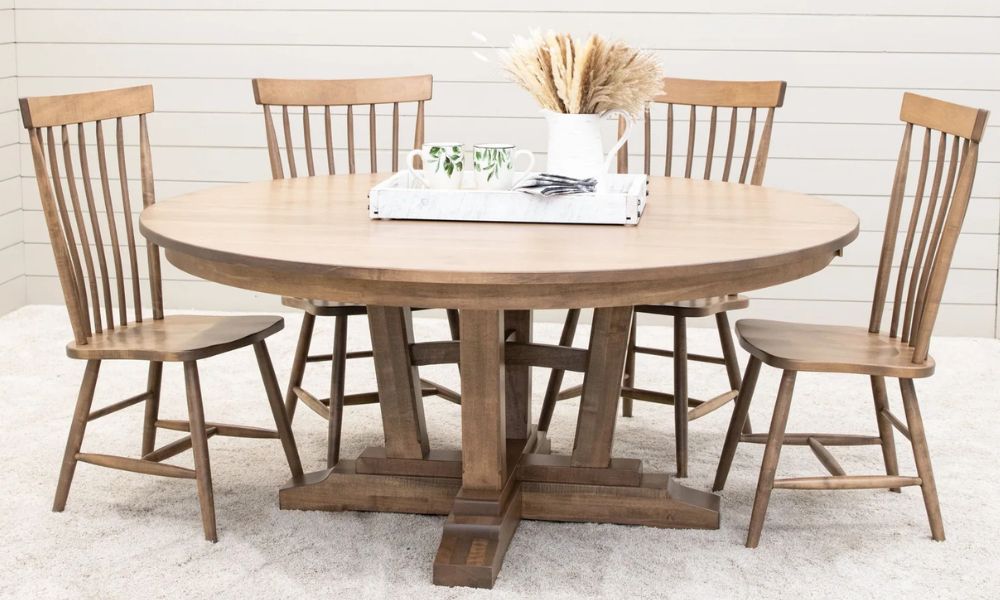
Wood grain patterns can add a lot of personality to wood furniture like tables. If you want a one-of-a-kind option for your eat-in kitchen or dining room, Dutch Craft Furniture of Berlin sells Amish kitchen tables, made from real wood, to order. These handmade tables feature natural variation and distinctive character from the wood’s patterns and will look incredible in any home. Order yours today!