

Everything You Need To Know About Mission-Style Furniture
You know how some furniture styles feel trendy for five minutes and then look dated fast? Mission pieces are the opposite. They have a calm, steady look that works for real life, kid chaos, pets, and all.
If you’ve seen those solid wood pieces with straight lines and rich stain and wondered what makes them different, you’re in the right place. This is where you get everything you need to know about mission-style furniture in clear, simple terms so you can decide if it fits your home, your lifestyle, and your budget.
What’s Mission-Style Furniture?
Mission-style furniture is a simple, sturdy style that grew out of the American Arts and Crafts movement in the late 1800s and early 1900s. It started as a reaction to fussy Victorian designs and mass-produced pieces. Furniture makers wanted honest construction, clean lines, and visible craftsmanship instead of heavy decoration.
The name “Mission” came from early pieces that were inspired by the Spanish missions in California, then it spread across the country as a popular style for homes, churches, and public buildings. Makers like Gustav Stickley helped define the look and turn it into a recognizable style. Mission quickly became known as everyday furniture that focused on practical use and solid build quality.
Features Of Mission-Style Furniture
Mission-style furniture focuses on straightforward structure and honest building methods. The look comes from how the piece is built, not from surface decoration or trendy details.
Common features include:
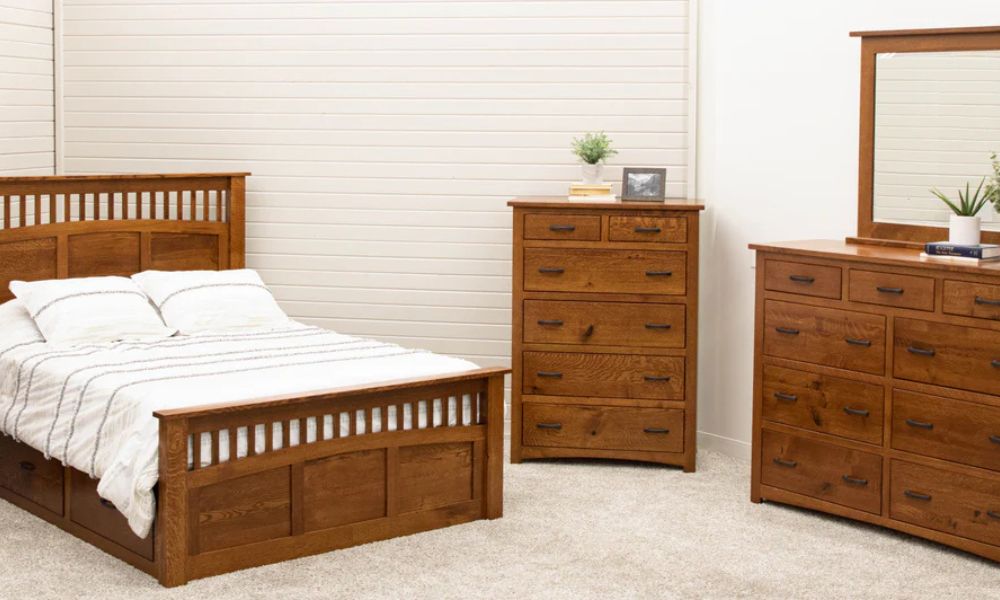
- Straight, clean lines with squared edges and simple profiles
- Solid hardwood construction, often oak or cherry
- Visible wood grain with medium to dark stain colors
- Slatted sides or backs on chairs, beds, and cabinets
- Flat, recessed panels on doors and drawer fronts
- Sturdy, blocky legs that support the weight evenly
- Minimal ornamentation, with little to no carving
- Exposed or clearly defined joinery that shows how parts connect
- Functional, simple hardware, often metal pulls with a geometric shape

Tips For Using Mission-Style Furniture in Your Home
Mission-style furniture fits easily into homes. The key is using it in ways that work with your daily routines, your existing pieces, and the rooms you actually live in. These ideas help Mission pieces feel comfortable, welcoming, and practical in each space.
Start With One Main Piece in a Room
Many people feel pressure to switch everything at once, which turns the process into a big project. Starting with one main Mission piece gives the room a clear focal point without overwhelming it. A dining table, bed, or TV stand can set the tone while the rest of the room catches up over time.
Once that anchor is in place, the other items in the room become easier to choose. You can look at the wood tone, proportions, and shape of that piece and let those details guide future choices.
Mix Mission Furniture with What You Already Own
Mission style works well with other simple, unfussy pieces. You don’t need to replace every chair, lamp, or table to make the room feel consistent. Keeping some existing items around the Mission pieces can keep the room relaxed and lived in.
Smooth leather, plain upholstery, and straightforward storage pieces blend especially well. When older or more decorative items stay in the room, aim for balance instead of perfect matching. The space should feel collected over time, not staged for a catalog.
Pay Attention to Wood Tones and Finishes
Stain and finish choices should stay in a close range. Too many clashing stains in one space can feel busy. When Mission furniture comes in rich oak or cherry, the other wood items in the room should connect to that tone.
Some people like to keep most of the larger wood surfaces in a similar color range. Then smaller pieces, frames, or shelves can shift a little lighter or darker. This keeps the room grounded while still giving it some depth and variety.
Use Textiles to Soften the Straight Lines
Mission pieces often have square legs, straight rails, and flat panels. That structure keeps things sturdy, but it can feel a little rigid by itself. Textiles are where the comfort shows up.
Cushions, throws, area rugs, and bedding bring in warmth and softness. Natural fabrics, simple patterns, and solid colors pair nicely with the strong lines of the wood. When fabrics add texture, the room feels inviting instead of stiff.
Plan Each Room Around How You Use It
Mission furniture was designed for everyday activity, so the layout needs to support real routines, not just look good in photos. Before bringing in a new piece, think through how you walk through the room, where people sit, and what storage you need. The placement should support those habits instead of fighting them.
In a living room, seating should face conversation areas and media centers in a clear way. In a bedroom, the bed and storage pieces should leave smooth pathways and enough open space. Mission furniture handles regular use well, but it still needs breathing room.
Keep Decor Simple but Personal
Mission style already has its own presence, so the surrounding decor doesn’t need to work very hard. A few well chosen items do more than a crowded shelf or wall. This style works best when surfaces stay open enough to show off the wood and craftsmanship.
Family photos, handmade pottery, woven baskets, and plants all sit comfortably next to Mission furniture. These items add personality without competing with the structure of the pieces. When you look around the room and see meaningful items and solid furniture working together, the space feels complete.

Mission Style Fits Real Life
You now have everything you need to know about mission-style furniture to spot it in a showroom and understand how it works in your home. Mission designs fit busy families, empty nesters, and anyone who wants furniture that works hard without feeling fussy.
If you're interested in Mission furniture for your home, come and shop Dutch Craft Furniture of Berlin's Amish-made bedroom furniture! Our beds, night tables, dressers, and wardrobes provide long-term comfort, storage, and support in busy everyday spaces. And because they're made to order, we can customize the size, layout, and finish of your bedroom set so it fits your room, routines, and style.