

The Pros and Cons of Choosing a Pedestal Dining Table
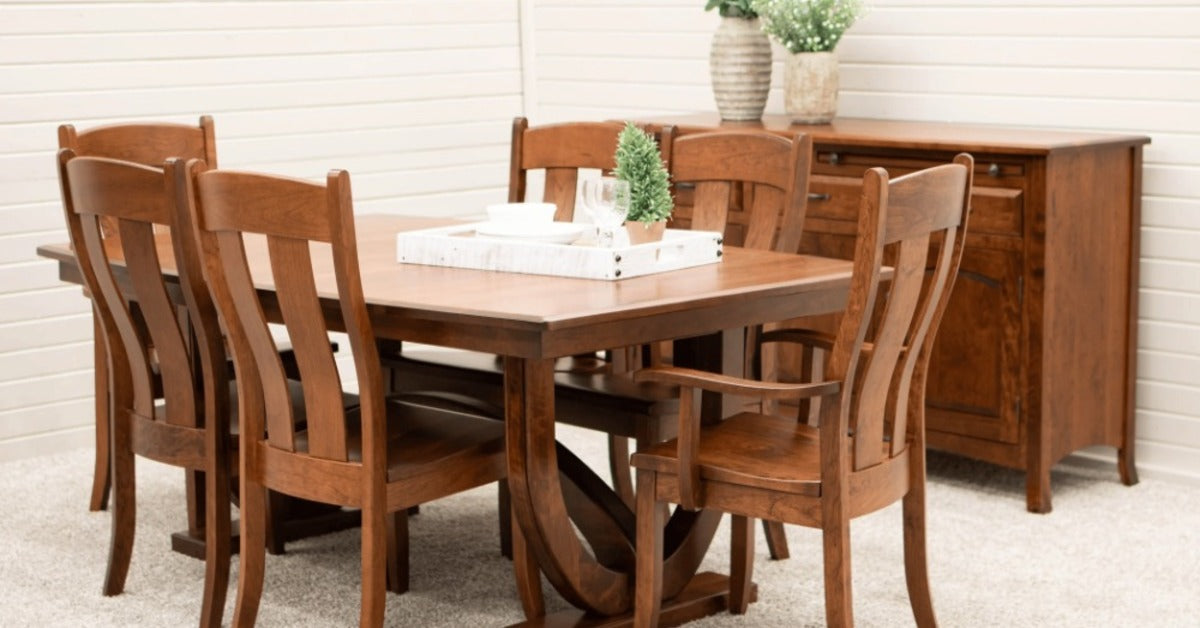
A pedestal dining table is one that's supported by one central column, usually a thick post or a decorative base, versus the four-legged tables you see in most dining rooms. That single-base construction comes with both pros and cons. If you're weighing whether a pedestal table is the right fit for your dining room, we're here to walk you through everything so you can make a call you won't regret.
Pro: No Legs in the Way
One of the first things people notice about pedestal tables is the extra legroom. With a four-legged table, the corner supports can get in the way of a chair or press against someone’s knees.
A pedestal base moves the support to the center. That leaves more open space around the edge, so no one has to sit with a table leg between their feet. If you regularly host guests or have kids who shift their chairs during dinner, that extra room makes the table much more comfortable to use.
Con: They Can Feel Less Stable Than Four-Leg Tables
The tradeoff for all that open legroom is stability. A single post carries the weight of the tabletop from one point, which works fine under normal conditions. But if someone leans hard on one edge, you can feel a slight tilt. Heavier pedestal bases reduce that effect, and wide-footed designs are more grounded than narrow ones. Solid wood bases hold up better than lighter materials because the weight of the base itself anchors the table. If stability is something you're especially concerned about, look closely at how wide the base spreads at the floor before you buy.
Pro: Seating Flexibility Without Counting Chairs
Pedestal tables seat people more flexibly than four-legged tables because there's no fixed corner position to work around. With a rectangular four-leg table, you're often counting chairs based on where the legs fall. A pedestal base doesn't force that. You can slide an extra chair in at the end without bumping into anything structural. For oval or round pedestal tables especially, you can fit one more person at the table than the listed seating count on a night when you need it.
Con: Oval and Round Shapes Come With Size Limitations

Pedestal bases pair most naturally with round and oval tabletops, and those shapes have a ceiling on how large they can go before the single base stops being enough support.
A round pedestal table works beautifully up to a certain diameter. Past that point, the overhang on either side creates too much leverage for one column to handle safely, and you start seeing manufacturers add a second pedestal or switch to legs. If you need a table that seats eight or more comfortably, a single pedestal round table probably won't get you there, and you'll want to look at double-pedestal or trestle options instead.
Pro: Easier to Clean Around
Cleaning under a four-legged table means navigating around four separate obstacles every time you sweep or mop. A pedestal base gives you one central column to deal with, and the floor around it is open. Chairs still need to be moved, but you're not chasing crumbs into corners framed by table legs. For anyone with little kids who treat the dining room floor like a canvas, that easier cleanup path adds up quickly.
Con: The Base Can Limit Chair Choices
Pedestal bases vary a lot in how they meet the floor, and that spread at the bottom affects which chairs work around the table. Some bases splay outward in four feet, and those feet can run right into the back legs of certain chair styles. If you already own chairs you love and you're adding a table, take measurements before you commit. The foot spread on a pedestal base is the number that decides whether your chairs slide in cleanly or bump up against something every time someone tries to sit down.
Pro: They Work Well in Smaller Dining Rooms
In a compact dining room, a pedestal table leaves more of the floor visible than a four-legged table. Without corner supports, the base looks less bulky even when the tabletop stays the same size. If your dining area is tight, that open space underneath can keep the table from dominating the room. It also gives chairs and foot traffic a little more breathing room when everyone sits down.
Con: Rectangular Tops Need Extra Attention

A pedestal base under a long rectangular top is a combination that needs more thought than it gets. The longer the top, the more support it needs at the ends, and a single central post doesn't reach those ends.
Some manufacturers use a reinforced top or a wider base to compensate. But if you're looking at a narrow or lightly built base under a long rectangular top, test it at the store if you can. Press down near the ends and see what happens. A well-built solid wood top adds weight that helps distribute the load, which is one reason solid construction matters on a pedestal table more than people expect.
Pro: They Photograph Well and Hold Their Look Over Time
Pedestal tables have a clean, uncluttered look that works in a lot of different dining room styles. The base draws the eye instead of disappearing into the background, especially on turned or carved post designs. That visual weight at the center of the table gives the whole piece a grounded look even without four legs spreading to the corners.
And because the design is simple at the floor level, it doesn't date as quickly as some furniture styles do. A solid wood pedestal table bought today still looks at home in a dining room twenty years from now.
So, Is a Pedestal Table Right for You?
What are the pros and cons of pedestal dining tables? The main pros are the open legroom, flexible seating, easier floor cleaning, and a cleaner look in smaller dining rooms. The main cons are the stability question on edge-heavy loads, the size ceiling on single-pedestal rounds, and the foot-spread issue that can conflict with certain chair styles.
If you want a table that keeps the space feeling open and gives you seating flexibility, a pedestal could be a great fit for you. But if you need a large rectangular table or you're working with chairs that have a specific back-leg style, you'll want to look at other options instead.
At Dutch Craft Furniture of Berlin, we sell handcrafted solid wood dining tables, both pedestal style and four-leg style. Come shop our selection in person, or contact us to ask about a custom piece for your dining room.