

A Complete Guide to Dining Table and Chair Heights
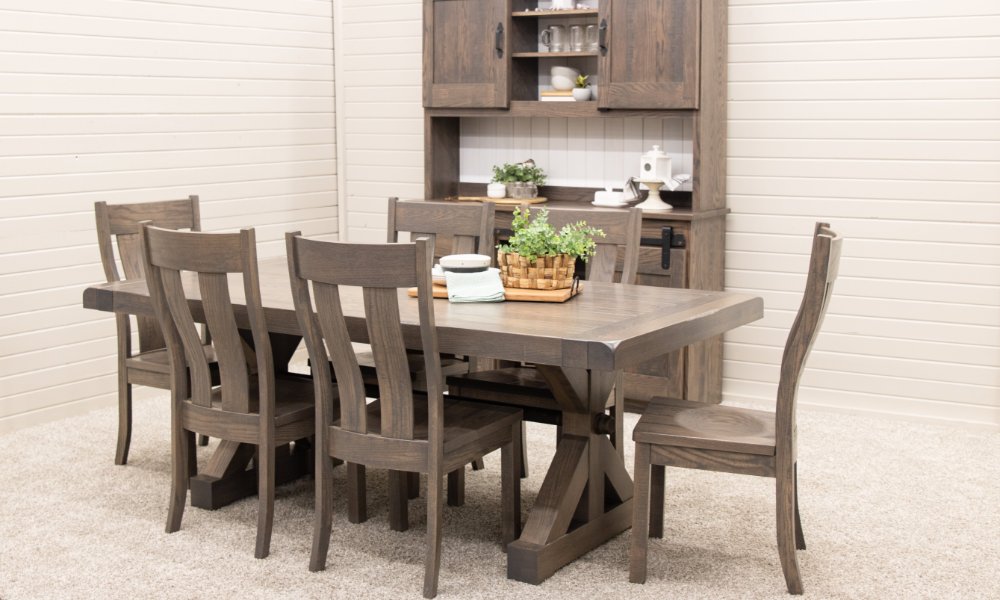
You need a new dining room set. You thought it would be as easy as finding a design you like and placing an order. But before you can click "add to cart," you're confronted by dropdown menus asking you about table heights and seat heights. Dining room table and chair height is important to get right—too much of a gap, and your arms are floating above the table, or you're hunching down just to reach your plate. To help you choose the right fit for your space, here's how to do the math.
The General Rule for Table and Chair Height
If you're not sure how to calculate the right pairing, let's break it down. What you need to know is one number: the gap between the top of the seat and the underside of the table. That gap should sit between 10 and 12 inches. Too little, and your legs press against the apron every time you shift. Too much, and you're reaching upward just to get your fork to your mouth.
So what does the formula look like in practice? Take your chair's seat height and add 10 to 12 inches. That's your target table height. If your chairs sit at 18 inches off the floor, your table should land between 28 and 30 inches. If your chairs sit at 20 inches, you're shopping for a table between 30 and 32 inches.
The formula runs in reverse too. Already have a table? Subtract 10 to 12 inches from the table height to find your ideal seat height range. A 30-inch table puts you in the market for chairs between 18 and 20 inches off the floor.
One more thing before you start pairing: the apron. That's the frame of wood running along the underside of the table between the legs. A deep apron eats into your legroom even when the heights line up on paper. If you're taller or like to sit with your legs crossed, check the apron depth before you commit.
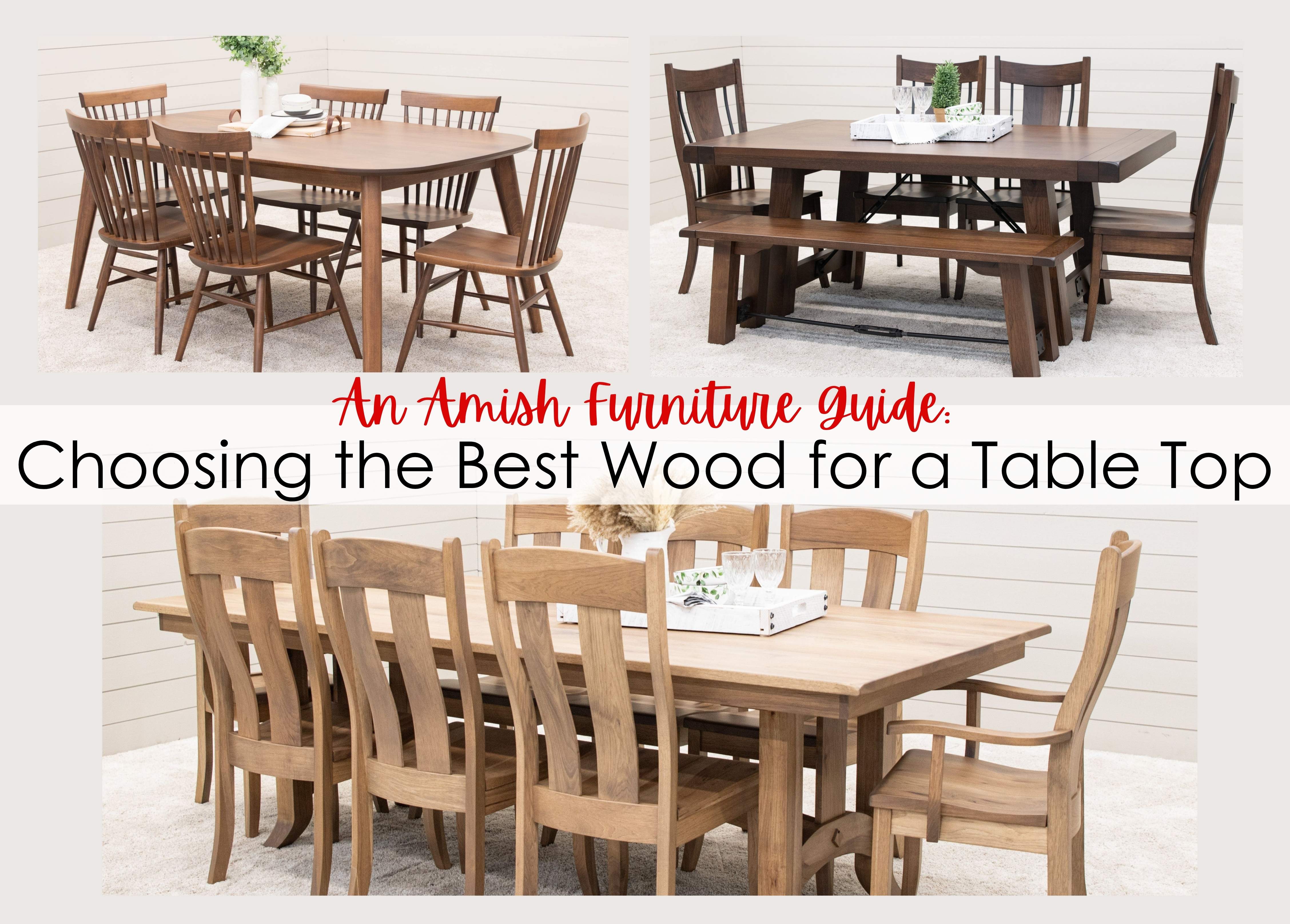
Most Amish-made tables feature a 3-inch apron. This includes dining height, counter height and bar height tables. The 3-inch apron is crucial for keeping the solid wooden tabletop from warping for all extendable dining tables. Some fixed tabletops, including the mid-century modern round table, are available without the apron.
Accompanying Amish dining chairs with arms are carefully constructed to fit neatly underneath without bumping into the apron. This allows all chairs to push in around the table.
Standard Dining Height: 30-Inch Table with 18-Inch Chairs

This is the combination you'll run into most often. A 30-inch table paired with 18-inch chairs gives you that 12-inch gap, which puts your arms at a natural resting height without any awkward reaching or hunching.
It's a forgiving pairing. Most adults anywhere from around 5'2" to 6'2" can sit comfortably without adjusting anything, which makes it the go-to for family dining rooms and spaces where guests of different heights are sitting down together.
Most solid wood dining chairs have an 18” seat height. Since Amish dining chairs are custom made to order, many people love the option of adding upholstered seats. All chair styles are available with fabric or leather seats. While the chair frame remains the same, the seats end up an inch or two higher with the addition of high-density foam and upholstery.
Not sure where to start? This is the pairing most people land on for a reason.
Counter Height: 36-Inch Table with 24-Inch Chairs

Counter height tables are popular in casual dining spaces and breakfast nooks. At 36 inches, the table sits about level with a kitchen counter, which is exactly where the name comes from. The chairs that pair with these tables usually land around 24 inches, keeping that 10 to 12-inch gap where it needs to be.
Because the seating is higher off the ground, counter height setups read as more relaxed and informal. You're perched rather than planted, which suits quick meals or a spot where people tend to linger with coffee.
All Amish dining tables are available as counter height tables. From small round tables to large trestle tables, counter height tables come in a wide range of styles and sizes. Consider an extendable counter height table with leaves for even greater flexibility in sizes and seating.
Worth thinking through before you go this route: this height can be trickier for younger kids and shorter adults. If your household covers a wide range of ages and sizes, consider who’ll be sitting there most often.
Counter height is a wonderful option for older people, or those who may struggle with mobility in getting in and out of regular height dining chairs. Choosing 24” swivel bar stools may make it even easier for the elderly.
Pub Height or Bar Height: 42-Inch Table with 28 to 30-Inch Chairs
Bar height tables are the tallest of the three standard options. Also called pub tables, these are often small round or rectangular pedestal base tables for 2-4 people. Most bar tables have fixed tabletops, rather than extending with leaves. At 42 inches, they call for chairs or stools with a seat height between 28 and 30 inches.
These show up in game rooms, home bars, and kitchen areas where people sit for drinks or quick bites instead of full meals. The higher seat puts you closer to standing height, so it works well when guests move between the counter and the table during a casual get-together.
Swivel bases are ideally suited for solid wood bar chairs with 30” seats. The swivel bases eliminate the need to push chairs back to get up from the table, especially important since most adults cannot reach the ground when sitting in a 30” seat.
That said, bar-height tables aren’t built for long dinners. After an hour or two, your legs may start to complain, especially if the stool doesn’t have a good footrest. If you’re planning a space for daily family meals, this probably isn’t your answer.
When Standard Heights Don't Quite Fit
Not every household fits neatly into those standard pairings. Taller families sometimes want a table closer to 32 or 34 inches. Shorter households sometimes want to go lower than 29 inches. Both are completely reasonable. If you're ordering custom furniture, this is an easy problem to solve. You can spec the exact heights you want, and a good builder will make it to those numbers.
The trickier situation is when you already own one piece and need to match it. If you're keeping your table, subtract 10 to 12 inches from the table height to find your chair range. If you're keeping your chairs, add 10 to 12 inches to the seat height to find your table target. Write those numbers down before you start shopping. It cuts out a lot of second-guessing.
Don't Overthink the Final Number
Don't let dining table and chair heights intimidate you. Once you know how to do the math and have the standard clearance numbers in your head, choosing the right pairing is actually pretty straightforward.
At Dutch Craft Furniture of Berlin, we sell handcrafted Amish dining room tables and chairs, and we make each set to order because every piece is custom-made for your home. Choose the table and chair height that makes the most sense for your setup, whether that's counter height for casual meals or standard height for a more traditional dining space.